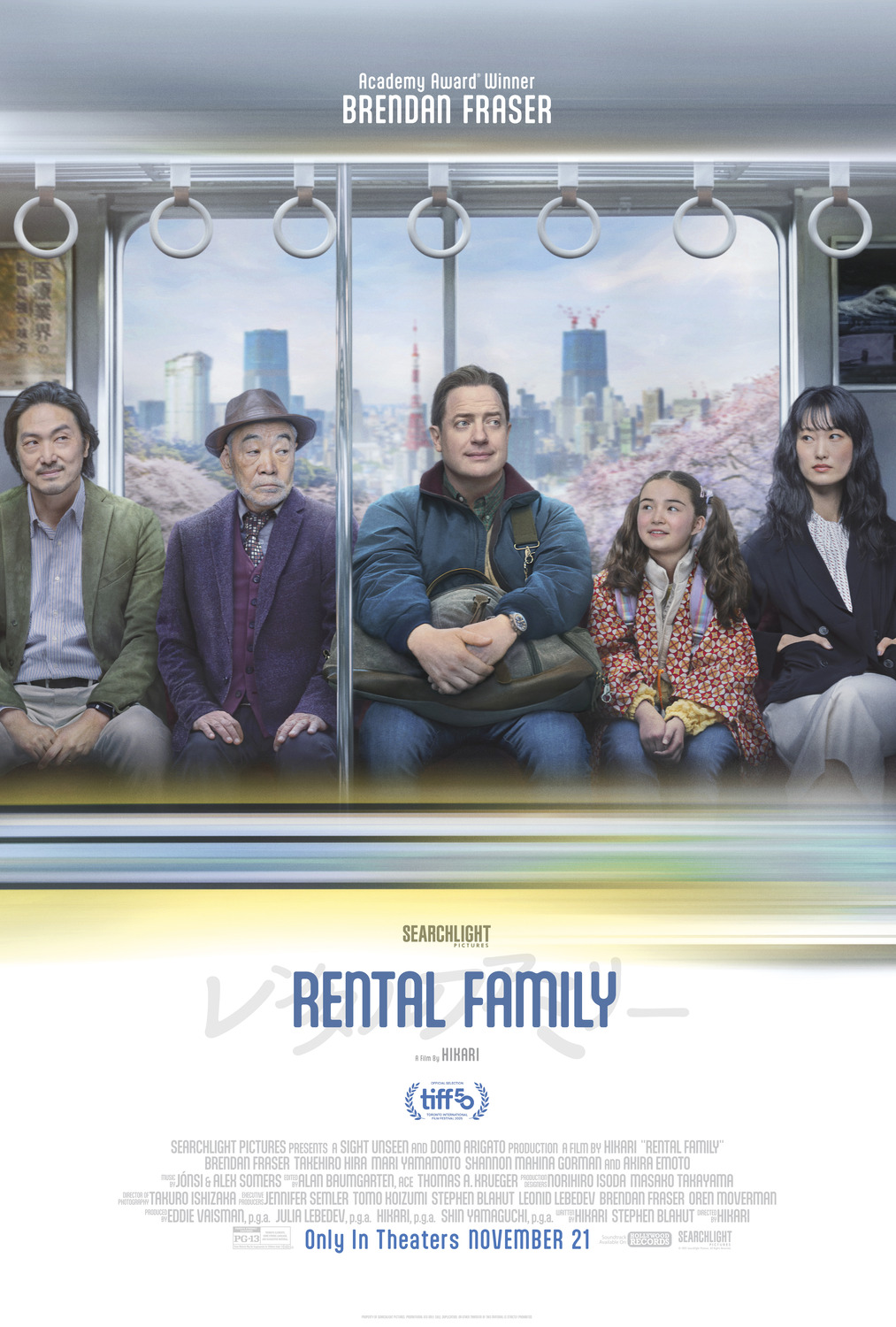
Much has been written about the hidden loneliness of Japan and how its society can appear eccentric to outsiders. Films have often attempted to explain this through a foreign lens, sometimes reducing it into mere fascination. Rental Family does not fall into this trap. Made by a Japanese team, the film offers a glimpse of the country that is both accurate and fascinating. It does not attempt to judge the culture it presents. Instead, it shows Japan in a way that is both entertaining and vulnerable, allowing the audience to understand rather than question. It becomes less about explaining Japan and more about allowing the audience to see it as it is.
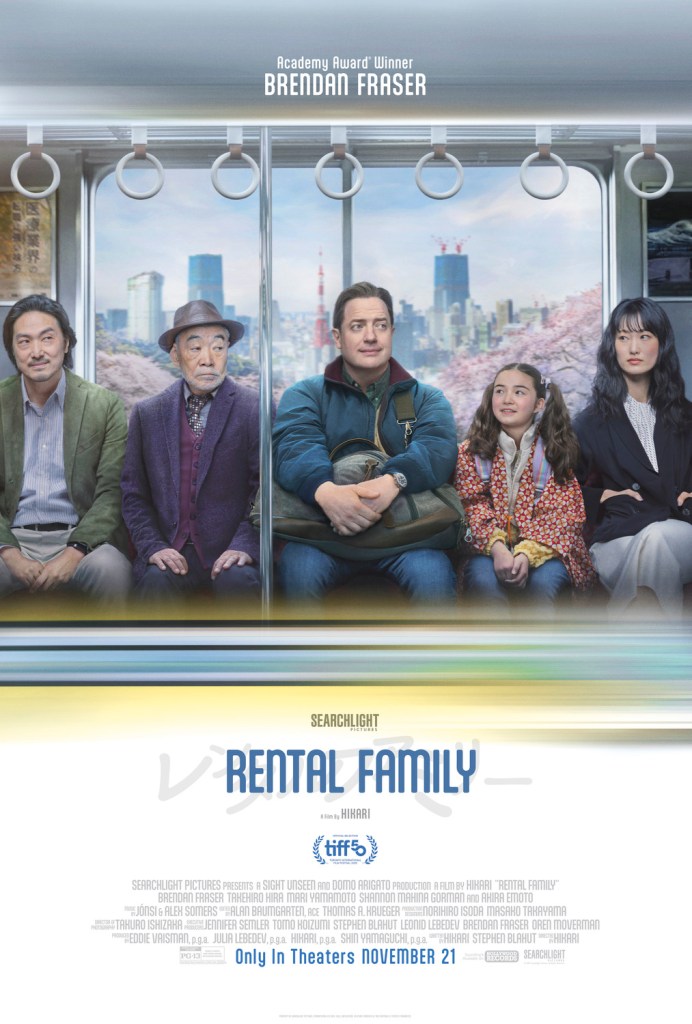
Rental Family (2025) follows Phillip, played by Brendan Fraser, a struggling actor who has lived in Japan for seven years. He has learned the language and has grown familiar with the culture, yet he remains an outsider in a place he has long tried to call home. In search of income, he applies for a job in a company that offers “rental family” services. Here, individuals are hired to portray family members for clients who need companionship. As Phillip takes on different roles, the audience is allowed to see Japan through his perspective. The narrative stays within his lens, presenting moments that may seem unusual at first, but slowly revealing the emotional truth behind them.
The film carries an indie sensibility that separates it from the typical Hollywood lens. Its storytelling is simple, yet effective in delivering its emotional weight. Japan is shown beautifully, especially in its final moments where the cherry blossoms frame the story with quiet elegance. Despite dealing with loneliness and isolation, the film manages to insert light and funny moments that do not feel forced. These moments balance the overall tone, making the narrative easier to digest. Brendan Fraser delivers a strong performance that anchors the film. While some of the Japanese actors may lag behind at times, they are still able to keep pace and contribute to the story.
The brilliance of the film lies in how it handles perspective. The story is told through a foreigner, yet it does not disrespect the culture it portrays. Instead, it allows the audience to understand the value of services like rental families within Japanese society. What initially appears as strange becomes something grounded in real emotional needs. It forces the audience to confront their own assumptions of what is normal. The film is well-rounded in its storytelling. Side narratives are introduced and resolved properly, giving the story a sense of completeness. It does not rely on shock value or exaggeration. Rather, it builds its narrative through small, meaningful interactions.
Rental Family shows that stories are best told by those who understand them. There is a need for more films that present cultures through the lens of local filmmakers. Without them, stories risk being misunderstood or reduced to spectacle. With the support of major studios, these stories can be told in ways that are both beautiful and respectful.
Rating: 4/5






Leave us a message and we will get to you soon