by Heinrich Domingo
To deduce a cinema work as solely the director’s effort is unfair to the hardworking production members. Yet, seeing Crimson Peak as an additional piece to Guillermo del Toro’s outstanding film portfolio makes us think otherwise. From Pan’s Labyrinth, Book of life, and the Hobbit franchise, comes another masterfully created film that would satisfy thriller movie fans. It is a film that renews interest of viewers to the beauty of mystery, surprises, and metaphors.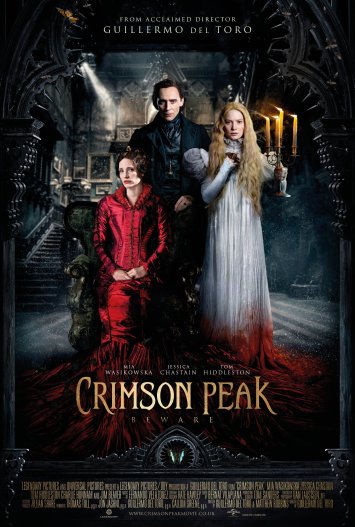
The story is set in the 19th century when the last fragments of monarchy met modernity. It began when a daughter of a rich businessman named Edith Cushing receives a warning from the ghost of her mother of the “crimson peak.” Meanwhile, two English siblings named Sir Thomas Sharpe and Lucille travel in major cities to look for investors for an invention used for mining red clays. When Edith and Sir Thomas fall in love, decided to get married, and live in the latter’s house, ghosts came again to the lady. While Edith tries to solve the mystery of paranormal presence, she uncovers secrets in the house and in her married life – secrets that are more horrifying than her ghost visitors.
Crimson Peak’s beauty does not lie in timely jump scares or in compelling visual editing, its use of the supernatural is a mere supplement. In the words of its female protagonist, “ghosts are metaphors” in the story. The plot contains far more interesting narrative of passion, love, and survival. Once the audience realizes that the movie is not meant to scare them, discussions in the film becomes richer.
To commend one element in this movie is insufficient. Since the production design, screenplay, and visual editing all work together in producing a beautiful film, all people involved in the making must be recognized. From actors and actresses to the production staff, all were able to deliver more than what is expected by the public.
The story of economic struggle delivered in a thriller film genre might not be the best plot in the market today. What the director did was to prove to cinephiles that passé stories of ghosts can be extended and remade to be great.
It is ideal to think that movies differ not on their creator but on their narrative. Yet, with the treatment in the Crimson Peak (and other earlier movies), I cannot help but hope that other production houses have the courage of del Toro and his team to think outside the box. Others must adopt a mindset that in order to bring some palatable movie, one must offer a dish that has not yet been served.





 Cinetactic
Leave us a message and we will get to you soon